
Your needs, this model
Does it fit your priorities?
Can it boil at least 1.5 L without extra temperature controls?
Yes. The plain RJ11-18-PL has a 1.8 L maximum and a basic on/off boiling cycle.
Explore this need in the finder →Is this the version with a loose-leaf infuser?
No. This plain PL package has a spout filter, not the tea basket supplied with the separate PL-TI model.
Explore this need in the finder →Can it heat 500 ml while I watch the fill level?
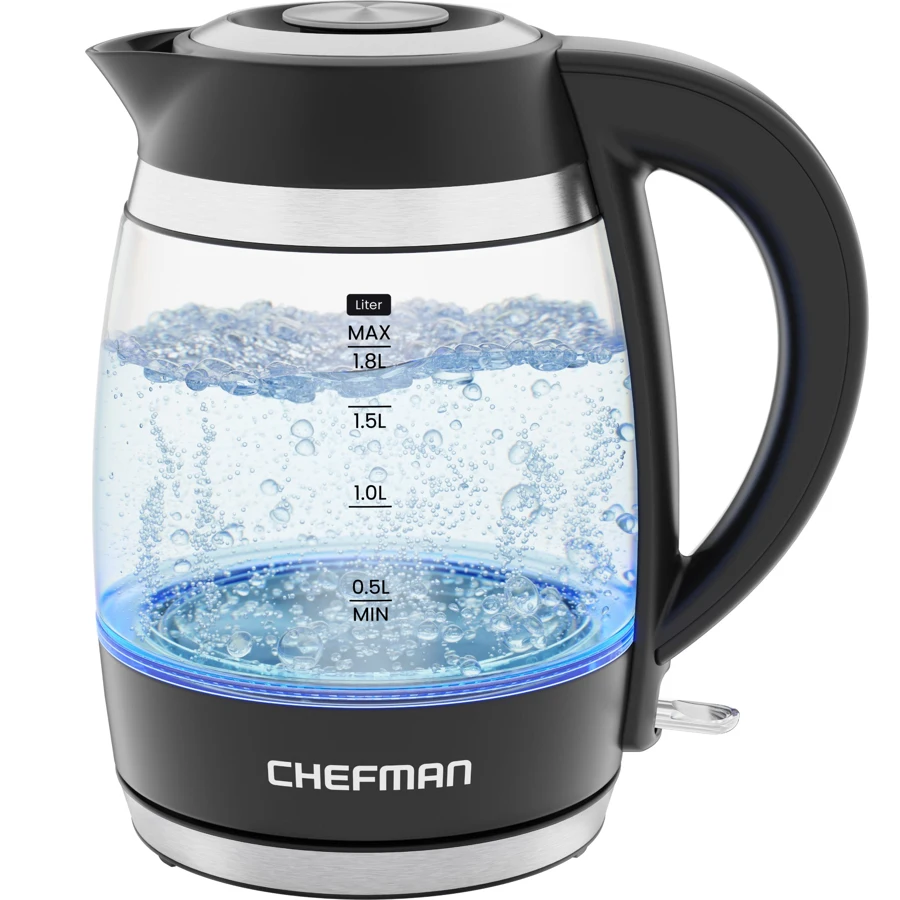
Yes. The exact guide permits 0.5–1.8 L and identifies a glass body with water-level markings.
Explore this need in the finder →A larger batch without a temperature menu
The RJ11-18-PL is a straightforward choice for someone who wants a larger jug of boiled water and little setup. Its 1.8-liter maximum suits a shared round or a larger serving vessel, while the removable lid and marked glass body make filling easy to understand. You start the cycle with a single switch.
The tradeoff is that the kettle stops at boiling. It does not offer a selected-temperature menu, a live numeric display or an automatic keep-warm routine. It also lacks the tea infuser supplied with the separate PL-TI model. Choose this plain version when heating water is the job and brewing takes place in your own cup or pot.
Match the fill range to your normal round
The exact guide specifies a 0.5 L minimum and a 1.8 L maximum. A half-liter heating batch is supported, as is a larger quantity up to the MAX line. A 300 ml requirement falls below that documented minimum; the fact that you can see a small amount through the glass does not make it an appropriate heating fill.
Measure your actual mugs, teapot or other vessel. A fixed claim about a number of cups is less useful when one household uses small teacups and another uses large mugs. If your routine regularly exceeds 1.8 L, decide whether a second cycle is acceptable rather than filling above the marked limit.
One switch means one main endpoint
The blue indicator lights illuminate while the kettle heats. Once the water boils, the lights turn off and the appliance automatically switches off. This provides a simple indication of cycle status without asking you to choose a drink type first.
The light is not a measurement of current water temperature. Nor does automatic boiling establish a selectable 100 °C preset: there is no numeric setpoint control here. If a tea recipe depends on heating directly to a lower target, an adjustable model is the more suitable tool. Letting boiled water cool is something you would manage separately.
Keep brewing accessories distinct
The plain PL has a filter at the serving spout. That part is intended to remain in place and is not the same as a basket for loose tea. If you want leaves to steep inside the kettle, compare the actual RJ11-18-PL-TI package and follow its own method.
For this model, a separate teapot or mug infuser keeps leaf handling outside the jug. That may suit a household where people drink different teas or use plain water for other drinks. It also avoids choosing an in-kettle brewing accessory that you do not intend to wash and use.
Serving convenience has a clear boundary
The jug lifts from a 360-degree base, allowing you to leave the power lead on the counter when serving. You can set it back from different directions to suit handle access. This cordless serving arrangement does not provide battery heating or keep the water actively heated away from the base.
The US reference specifies 1500 W at 120 V. That is the appliance’s electrical rating, not our own speed test. The useful everyday questions are whether your required amount fits the fill range and whether simple boiling meets your routine. A short marketing boil-time claim does not answer those questions on its own.
Visible glass still needs regular care
The glass body lets you check the marked water level and see deposits inside. The removable lid gives access for cleaning after the kettle has cooled. Chefman tells you to clean the fixed spout filter in place using hot water with a cloth or brush, rather than trying to pull it out.
Unplug before cleaning and keep the kettle and electrical base out of water and the dishwasher. Follow the precise descaling method in the PL guide as mineral deposits accumulate. Glass and stainless-steel accents should not be stretched into a promise that every water-contact component is glass or metal.
Where this model earns its place
Shortlist the plain PL for a 0.5–1.8 L boiling routine with a visible fill level and removable lid. Choose the infuser package if you want to brew in the jug, or an adjustable kettle if selecting and holding a temperature matters. Those are real differences in use, rather than reasons to add features to a simple model’s specification.
Chefman’s plain PL product reference and the exact RJ11-18-PL user guide, pages 8–13, support this assessment.
Key details at a glance
| Controlled-pour gooseneck | No |
|---|---|
| General-purpose spout | Yes |
| Selectable temperature | No |
| Live temperature readout | No |
| Fahrenheit display | No |
| Celsius display | No |
| Completely removable lid | Yes |
| External water-level window | Yes |
| Tea infuser included | No |
| Nominal maximum capacity | 1.8 L |
| Documented minimum fill | 500 mL |
| Rated input power | 1500 W |
| Documented supply voltage | 120 V |
| Pouring arrangement | General-purpose serving spout with a fixed filter; jug lifts from a 360-degree base. |
| Temperature controls | Single-switch boiling; blue heating light switches off when the water boils. |
| Holding routine | The documented routine switches off after boiling and provides no keep-warm control. |
| Water-contact material details | Borosilicate glass kettle with stainless-steel accents; this is not an all-glass or plastic-free water-path claim. |
| Care and access | Hand clean after cooling. Clean the spout filter in place; do not remove it or put the kettle/base in a dishwasher. |
| Electrical edition and base | 1500 W/120 V household kettle on a supplied mains-powered base. |
Use the exact model’s instructions for operating limits, supplied equipment and version differences.
Sources for this assessment
Find a kettle for your daily routine.
Compare pouring style, batch capacity, temperature controls and the details that matter to you.